


Ragdoll Archers - CrazyGames
4.4512.00 Reviews
App Specs
- Version
- 0.6.4
- Updated On
- License
- Free
- Downloads
- 1,000,000+
- Developer
- CrazyGames.com
- Categories
- Arcade
- Platform
- Android
Screenshots
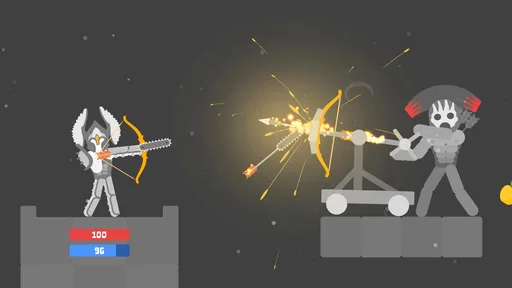
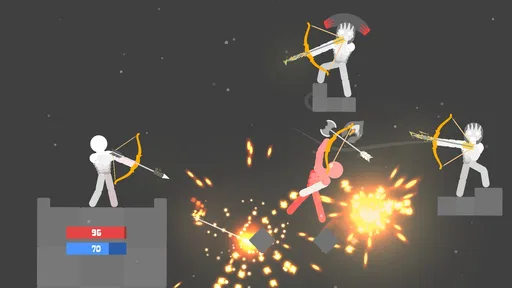
 Analysis by AppCompare
I first understood the appeal of Ragdoll Archers during a short shared-device session: it is the sort of arcade game someone can pick up, take a few shots, laugh at a clumsy miss, and hand back without needing a long explanation. The premise is simple, but the shots have enough physical weight and unpredictability to make each attempt feel more involved than ordinary tap-to-hit arcade play. You aim, release, watch the arrow travel, and adjust when the result is not what you expected.
That makes it a natural fit for a household tablet or phone used by several people. One person can play for a few minutes while another watches, then they can swap without losing much time learning controls. I would not describe it as a deep multiplayer experience or a family management tool; its strength is much more modest and practical. It works well as a quick, informal game for people sharing one screen, provided everyone is comfortable taking turns and accepting that the game itself does not replace clear household rules.
How the physics make short sessions enjoyable
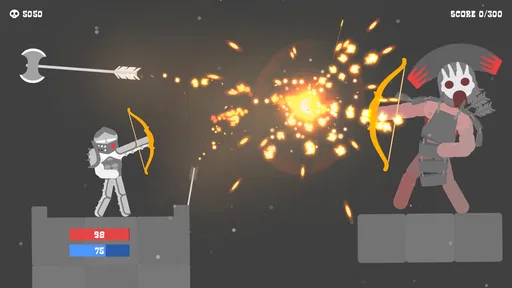
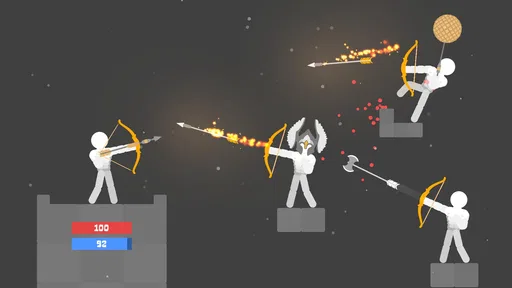
The core pleasure comes from judging distance, angle, and timing rather than simply tapping an enemy. The bow feels more satisfying when the shot has a visible arc and the target reacts physically. A successful hit is rewarding because it looks earned, while a poor release can become entertaining instead of merely frustrating. The ragdoll presentation gives mistakes a playful tone, which is important when younger or less experienced players are watching someone else play.
I found the best rhythm came from treating every attempt as a small experiment. Rather than immediately repeating the same movement, I would change one thing: raise the aim slightly, alter the strength, or wait for a better opening. That approach makes the game easier to understand and also gives a child and an adult something useful to discuss while sharing the device. “Try a little higher” is more engaging than simply telling someone to press faster.
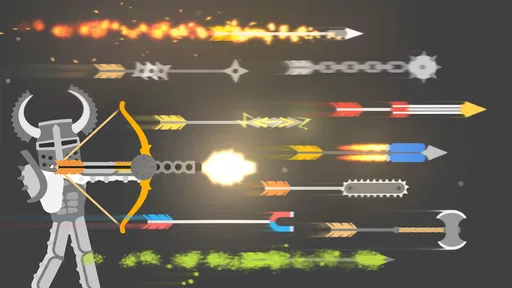
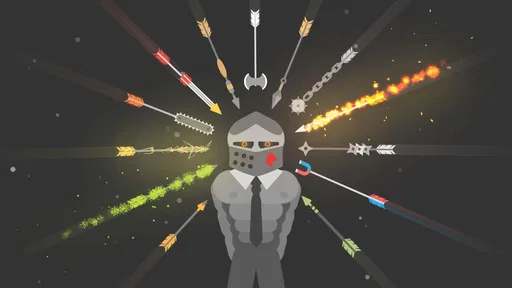
The unique arrow designs add variety to the basic shooting idea, but they also mean that a familiar aiming habit may not always be enough. I would approach each new arrow as a reason to observe its behavior before trying to play quickly. This is one of the less obvious strengths of the game: it rewards curiosity. You are not only asking whether you hit the target; you are learning how a particular shot behaves in the game’s physics.
That said, the physics can also create friction. When a shot behaves differently from what I expected, the result may feel amusing once and annoying the next time. Players who want precise, competition-focused control may dislike the uncertainty. The game is better suited to relaxed experimentation than to a serious archery simulation. Its realism is a playful approximation, not a promise that every arrow will behave like a real-world projectile.
A useful routine for a shared phone or tablet
For a household session, I would set a simple turn pattern before opening the game. Each person gets a small number of attempts, then passes the device. The exact number is less important than keeping the agreement clear. This prevents the most experienced player from quietly taking over and gives beginners room to learn without feeling rushed.
Worth Reading Before You Choose

Flipboard Shows What News Apps Must Do Beyond the Feed

Switching to Android Auto Means Rethinking Your Driving Routine

Google Calendar Makes a Crowded Week Easier to Manage

Ludo King Makes the Most of the Minutes Between Plans

Baby Panda World Brings Quick Play to Modern Phones, but Its Game Library Feels Busy

ESPN’s Live Game View Makes Following Close Games Easier
A good variation is to let the person watching choose the next adjustment, while the player controls the shot. That turns a solitary arcade game into light coordination. It also helps younger players focus on cause and effect: the observer predicts what may happen, the player executes the idea, and everyone sees whether the prediction worked. The arrangement costs nothing and uses no invented team feature; it is simply a better way to share the same screen.
I would also avoid handing the device over in the middle of a particularly confusing attempt. Because the shot depends on setup and timing, a clean handoff after an outcome feels fairer than interrupting someone while they are still preparing. This small habit matters more than it sounds. Many arguments around shared games come from unclear turns rather than from the game itself.
What to expect when installing it
The game is free, belongs to the arcade category, and comes from CrazyGames.com. It was released on September 19, 2023, and the current version is 0.6.1. It runs on Android 7.0 or later, so it can remain an option for some older Android devices rather than being limited to recent phones. I would still check that the intended device is compatible before planning a shared session, especially if the household relies on an older handset.
The store page shows a 3.4 average from around 2.2 thousand ratings, with more than 500 thousand installs and around 225 written reviews. I read those figures as a sign of a game with a noticeable audience, but not as proof that it will suit everyone. The rating suggests a mixed experience, which matches my own view: the central idea is easy to enjoy, while patience with physics-driven inconsistency will determine whether it stays installed.
Because it is free, the main decision is not financial. The more relevant questions are whether the device owner is comfortable adding another game and whether the people using the device can agree on turns. A free download can still create practical friction if storage, attention, or household expectations are limited. I would make that decision openly instead of treating “free” as automatically harmless.
The content rating is Teen, so I would not casually hand it to a young child without first considering whether that rating fits the household’s standards. The cartoon-like ragdoll presentation may feel light, but the presence of archery and combat themes still makes the age context worth discussing. For a teenager or adult, that boundary is straightforward. For a younger child, I would let a parent or guardian make the call rather than assuming the playful style settles it.
Account boundaries and device ownership
A shared device creates a different question from a shared game. If the phone or tablet belongs to one person, that person should decide whether others may install, open, or remove applications. I would not assume that a free arcade title should be added without permission simply because it is small and quick. The cleanest arrangement is to agree on who manages downloads and who is allowed to play.
It is also useful to separate the idea of a turn from the idea of ownership. A child may be allowed to play for a while without being given control over the device’s wider settings. An older sibling may be trusted to play but not to change anything else. These boundaries are not features of Ragdoll Archers; they are household decisions that make a shared installation less confusing.
I would keep expectations especially clear if the device is used for school, work, or communication. A short arcade session can easily stretch when a player is trying to improve a difficult shot. Agreeing that the device returns to its owner after the session avoids the awkward moment when entertainment conflicts with an important task. The game is at its best when it fills a spare moment, not when it interrupts something more important.
Coordinating play without turning it into a competition
The game naturally invites comparison because everyone can see the result of each shot. That can be motivating, but it can also make a beginner feel exposed. I prefer cooperative goals during mixed-skill sessions: predict the path, identify why a shot missed, or see how many attempts it takes to understand a new arrow. These goals keep the focus on learning the physics rather than humiliating the person who has the least experience.
For more experienced players, a useful self-imposed challenge is to change only one variable at a time. If the arrow falls short, adjust strength without completely changing the angle. If it passes above the target, lower the aim while keeping the release similar. This method makes improvement easier to see and gives spectators a meaningful role. It is also more satisfying than relying on random repeated attempts.
Another practical tip is to use short sessions when several people are waiting. The game’s arcade structure supports that better than a long-form adventure would. Nobody needs to remember a complicated story or manage a large inventory between turns. If someone wants a deeper solo experience, though, a puzzle game, a strategy title, or a full archery game may offer more lasting progression and clearer mastery.
This is where the usual alternatives have an advantage. A traditional arcade game often gives immediate, highly predictable feedback, while a realistic physics game may offer more technical control. Ragdoll Archers sits between those styles: it is accessible enough for quick play, but its physical reactions introduce uncertainty. I see that as the reason to choose it, not as something to overlook. If you want a clean high-score test with repeatable inputs, another arcade option may be a better fit.
Age context, trust, and supervision
The Teen rating deserves a place in the decision even when the game looks cartoonish. I would treat the rating as a prompt for an age-appropriate conversation, especially on a device used by children and adults together. A parent can decide whether the combat framing is acceptable, whether play should happen in a common room, and whether the game belongs on a child’s personal device at all.
Supervision does not need to mean hovering over every shot. For a teenager, a quick explanation of the rating and the household’s expectations may be enough. For a younger player, I would preview the game personally and watch the first session. That gives the adult a chance to judge the tone directly rather than relying only on the title or the cartoon physics.
Trust also includes how the device is returned. A shared game should not leave the next person with a changed layout, depleted battery, or a device locked in an awkward screen. I would make “finish the attempt, close the game, and return the device ready for its owner” part of the routine. It sounds ordinary, but it is the difference between a pleasant shared activity and a recurring household annoyance.
Players who are sensitive to chaotic motion may want to approach it cautiously. The ragdoll reactions and unpredictable arrow paths are central to the experience, so someone seeking calm, methodical play may find the presentation tiring. Likewise, anyone looking for a substantial narrative, a carefully structured campaign, or a strong social system should skip this one and choose a game built around those goals.
Who will enjoy it most?
I would recommend it to people who like short arcade sessions, playful physics, and the satisfaction of improving through observation. It is particularly suitable for a teenager or adult who wants something easy to start but not completely mindless. It also works for a household that enjoys taking turns and talking through attempts rather than expecting a formal multiplayer mode.
It is less convincing for someone who wants long-term progression or a polished competitive ladder. The current version, 0.6.1, also suggests that players should keep their expectations practical: I would approach it as a compact arcade experience rather than a fully developed replacement for a large action game. The low barrier to entry is appealing, but it does not remove the need for tolerance when a shot feels unpredictable.
In everyday use, I can imagine opening it while waiting for dinner, during a short break, or when two people have only one device available and want something they can enjoy together. I would not choose it for a long family game night where everyone expects a shared campaign or equal participation at all times. Its best setting is informal, brief, and flexible.
My household verdict
The strongest reason to try it is the combination of simple controls and physical consequences. A single shot can create a small problem to solve, a funny failure, or a useful lesson about angle and force. That gives the game more character than a basic tap-to-score arcade title, while keeping it approachable enough for quick handoffs.
My reservations are equally clear. The physics will not satisfy every player, the Teen rating requires an age-aware decision, and shared-device use depends on household coordination rather than built-in boundaries. I would also avoid presenting it as a deep archery simulator or a full multiplayer game. It is a focused arcade experience, and it works best when everyone understands that limitation.
Overall, I would install Ragdoll Archers on a compatible shared Android device if the intended players enjoy experimenting with shots and can agree on turns. The free price makes trying it easy, and the audience size shows that it has reached plenty of players, but the mixed rating is a useful reminder to keep expectations grounded. For my household, it earns a place as a short, watchable game for casual sessions—not as the main game for everyone, but as a lively option when one device and a few spare minutes are all we have.
Pros
- Simple controls make aiming and shooting easy to learn.
- Physics-based battles create funny and unpredictable moments.
- Many weapons and upgrades add variety to each run.
- Short levels work well for quick gaming sessions.
- Cartoon visuals are colorful
- clear
- and suitable for most ages.
Cons
- Progress can feel repetitive after playing the same battle patterns.
- Some upgrades and rewards may require considerable grinding.
- Ads can interrupt gameplay
- especially between completed levels.
- Physics occasionally causes awkward hits or inconsistent movement.
- The game may become challenging without spending resources on upgrades.
FAQs for Ragdoll Archers - CrazyGames
What is Ragdoll Archers, and how does the gameplay work?
Ragdoll Archers is a physics-based archery game in which you control a flexible ragdoll archer and fight enemies using carefully aimed shots. You drag and release to set the direction and power of each arrow, then watch the physics determine the impact. The objective is to defeat opponents, avoid damage, collect rewards, and improve your character as the challenges become more difficult.
Is Ragdoll Archers free to download and play?
Ragdoll Archers can generally be downloaded and played for free, although the game may include optional in-app purchases. These purchases can provide upgrades, currency, cosmetic items, or other advantages, depending on the version available on your device. It is possible to make progress without paying, but players should review the store listing and purchase settings before downloading, especially if children use the device.
Does Ragdoll Archers require an internet connection?
The core gameplay of Ragdoll Archers is usually designed for quick, casual sessions and may work without a constant internet connection. However, some features can depend on connectivity, including advertisements, cloud-related services, special events, updates, or in-app purchases. Availability may vary between Android and iOS versions, so checking the current store description is recommended if offline play is important to you.
Are there advertisements or optional purchases in Ragdoll Archers?
Players should expect that Ragdoll Archers may contain advertisements, particularly between levels or after completing certain actions. The game can also offer optional purchases for coins, upgrades, or other benefits. Ads and payment options can differ according to the platform, region, and app version. Before installing, review the store’s in-app purchase information and use parental controls if necessary.
Is Ragdoll Archers suitable for children and casual players?
Ragdoll Archers is easy to understand because its controls are based on aiming, dragging, and releasing, making it accessible to casual players. Nevertheless, the game focuses on cartoon-style combat, archery, and ragdoll reactions, which may not suit every child. Parents should check the age rating, advertising content, privacy information, and purchase options before allowing younger players to install it.


